 By
By Eli Lilly reported stronger-than-expected fourth-quarter earnings and issued robust guidance for the coming year, as soaring demand for its GLP-1 drugs reaffirmed its dominance in the global weight-loss drugs market.
The US pharmaceutical giant posted net income of $6.64 billion, or $7.39 a share, up from $4.41 billion, or $4.88 a share, a year earlier.
Adjusted earnings came in at $7.54 a share, comfortably ahead of analysts’ expectations of $6.91 a share, according to FactSet.
Revenue rose 43% to $19.29 billion, beating Wall Street estimates of $17.94 billion.
The surge was driven largely by a 46% increase in sales volume, partly offset by a 5% decline in realised prices.
Eli Lilly’s share price surged by more than 8% during premarket trading on Tuesday on the back of the solid earnings announcement.
Explosive growth in GLP-1 drug sales
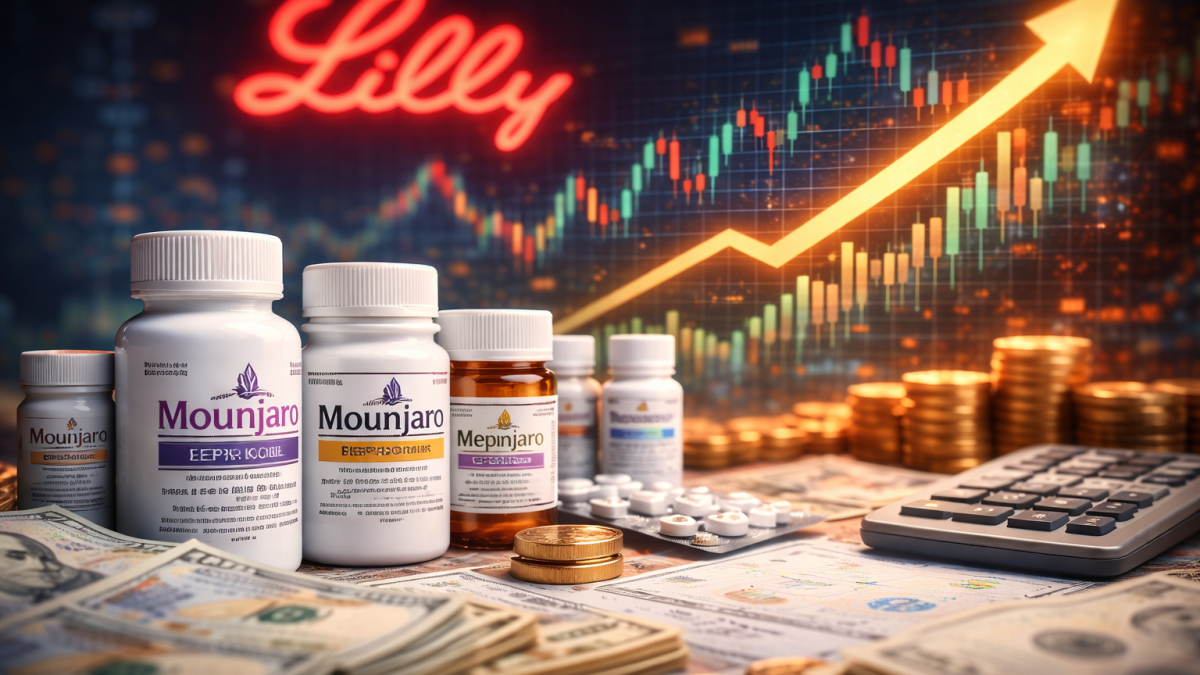
The results were propelled by soaring demand for Lilly’s blockbuster GLP-1 drugs, Mounjaro and Zepbound, which are used for diabetes and weight management.
Both products recorded more than double the sales of the previous year.
Mounjaro generated $7.41 billion in revenue in the quarter, up from $3.5 billion a year earlier, while Zepbound posted $4.26 billion in sales, up from $1.9 billion.
Together, the two drugs have become the primary growth engine for the company, reflecting the rapid expansion of the global obesity and diabetes treatment market.
Lilly’s tirzepatide franchise, marketed as Mounjaro and Zepbound, has helped the company consolidate its position as a leader in the weight-loss drug segment, which has become one of the most lucrative areas of the pharmaceutical industry.
Guidance signals continued momentum
Lilly forecast 2026 revenue of $80 billion to $83 billion and earnings of $33.50 to $35 a share, well above analysts’ expectations of $77.64 billion in revenue and $32.47 a share in earnings.
At the midpoint of its forecast, the company expects sales to grow by about 25% this year, signalling continued momentum despite mounting pricing pressure and intensifying competition.
The guidance marks a sharp contrast with rival Novo Nordisk, which warned earlier this week that its sales and profit could fall by as much as 13% this year.
Novo cited declining US prices and the expiry of exclusivity for some of its blockbuster drugs in key international markets.
Pricing pressure looms large
Despite its strong outlook, Lilly acknowledged that it faces significant headwinds from falling drug prices.
The company said global pricing could decline by a low- to mid-teens percentage, driven by multiple factors including lower Medicaid pricing, discounted direct-to-consumer rates for Zepbound and broader policy changes.
Both Lilly and Novo recently struck landmark agreements with the Trump administration to cut the cost of obesity and diabetes drugs for Medicare and Medicaid beneficiaries from 2026.
Under the deals, the companies also agreed to offer discounted prices directly to consumers through a planned government-backed platform, TrumpRx.
In return, the companies will receive a three-year exemption from tariffs.
While the agreements are expected to expand access and boost prescription volumes over time, they are likely to weigh on overall revenue growth.
Race to launch next-generation weight-loss drugs
Lilly is preparing to launch a new oral weight-loss drug, orforglipron, which could further transform the market.
Analysts believe the pill format could attract patients who are reluctant to use injectable treatments, potentially driving even higher demand than existing products.
The company said it expects to launch the drug in the second quarter, pending regulatory approval in the United States.
Lilly has also submitted regulatory filings for orforglipron in Japan and the European Union, signalling its ambition to secure a global footprint in oral GLP-1 treatments.
Market leadership under pressure
At the same time, competition is intensifying as rivals explore more convenient drug delivery methods, including once-monthly injections and oral therapies.
Novo Nordisk is preparing for the US launch of its own Wegovy pill, raising the stakes in the battle for market share.
Lilly’s share of the US obesity and diabetes drug market rose to 60.5% in the fourth quarter, up 2.6 percentage points from the previous quarter, while Novo’s share stood at 39.1%.
The figures highlight Lilly’s current dominance but also the fragility of leadership in a fast-evolving market.
As the global appetite for weight-loss drugs continues to grow, investors are increasingly focused on whether pharmaceutical companies can sustain growth amid falling prices, regulatory scrutiny and technological innovation.
Lilly’s latest results suggest that, for now, demand remains strong enough to offset these pressures.
But the coming year is likely to test whether the company can defend its lead as the race for the next generation of weight-loss treatments accelerates.
The post Eli Lilly beats earnings, lifts outlook on booming Zepbound and Mounjaro sales appeared first on Invezz